
Faith is the reality of what we hope for, the proof of what we don’t see. — Hebrews 11:1
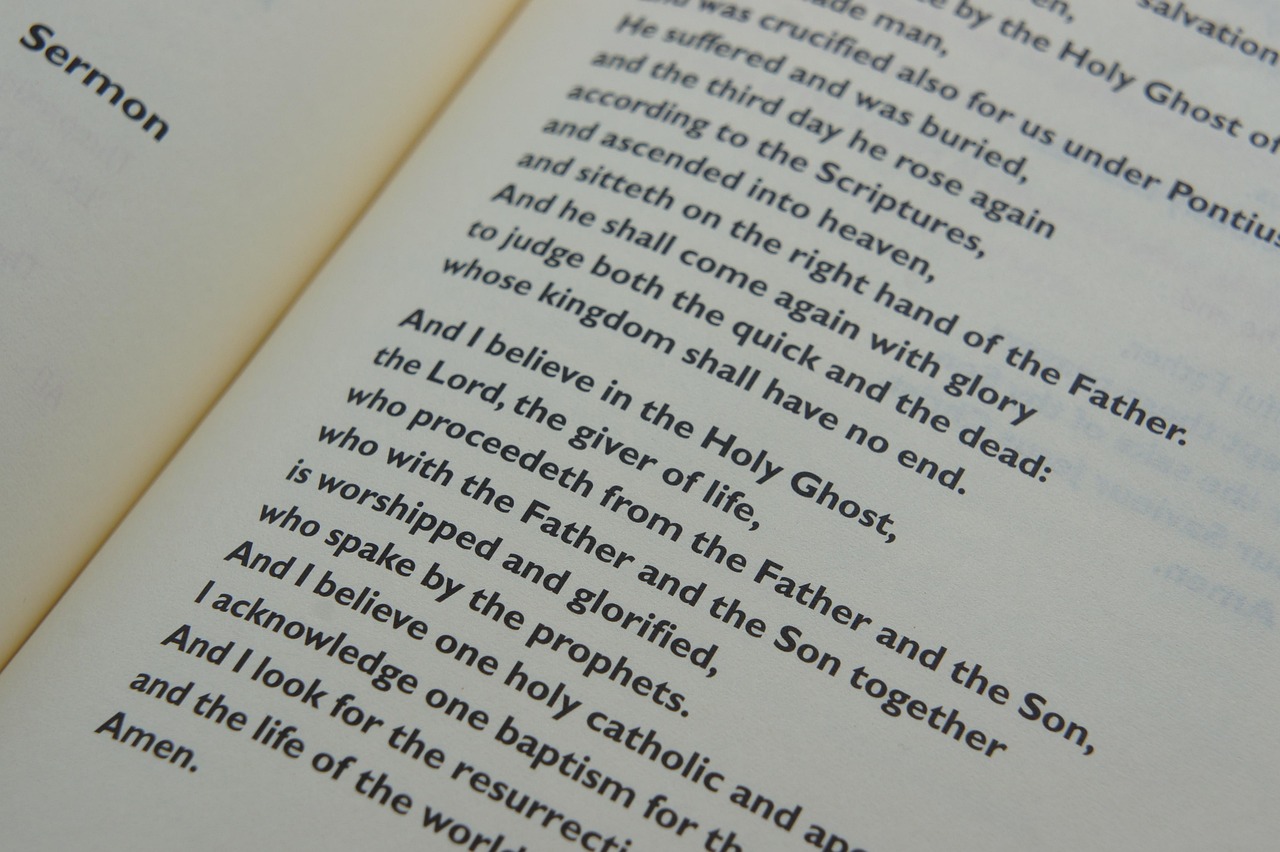
Confession time: I have a problem with reciting affirmations of faith in church. The intent of those creeds, of course, is good. It’s to express what we believe to be the basics of the gospel.
But which affirmation do you use? Look in the back of the United Methodist hymnal and you’ll find ten of them. They range from the Apostles’ Creed and the Nicene Creed to various social action ones to ones taken straight out of the Bible.
So, suppose you’re in church and you’re asked to stand up and recite one of them as you read it from the screen. The problem: You haven’t studied it beforehand but you’re to “believe” what you’re saying, no questions asked.
However, you SHOULD ask questions. Do you believe that Jesus was literally “born of the Virgin Mary,” or that he “descended into hell” after he died? If you have problems with those two Apostles’ Creed items, are you any less of a Christian? Are you doomed?
No. Faith can include moving from literalism, where we see things in certain, black/white terms, to seeing/believing/being moved by the truth behind what we read. The two items above, for example, express this: Jesus was born of the Holy Spirit, the unique incarnation of God in human life; the Nativity expresses that. And Jesus defeats the power of evil and liberates us to live freely, compassionately, and justly; hell has lost.
Instead of “affirmations of faith” maybe we should call them the “starting points” for a deeper faith. Read them, but question them: “What do they really mean for me, based on my experiences, my study of the Bible, and my fellowship with other Christians?” That way we discover, for each of us, how God is moving today and how we can respond. (Funny, isn’t it, that it’s easier to debate the finer points of theology, but harder to debate actions of justice and love that arise from those who may not articulate the faith very well?)
In this respect, doubt is good. It can lead to spiritual maturity. As one of my favorite authors, Brian McLaren, wrote:
Doubt need not be the death of faith. It can be, instead, the birth of a new kind of faith, a faith beyond beliefs, a faith that expresses itself in love, a deepening and expanding faith that can save your life and save the world.
As you always said, don’t check your brain at the door.
Greg,
Another very thoughtful & insightful reflection….
This passage from Hebrews has always resonated with me…
Thank you, once again 🙏💗