
Isn’t this the fast I choose: releasing wicked restraints, untying the ropes of a yoke, setting free the mistreated, and breaking every yoke? — Isaiah 58:6
Father Richard Rohr must have been thinking of this verse from Isaiah when he said: I think the Christian religion got off on a bad start when it overemphasized the notion of belief as a verbal assent to an idea. I think we must …do our best to redefine belief as a commitment to action, to a change in lifestyle.
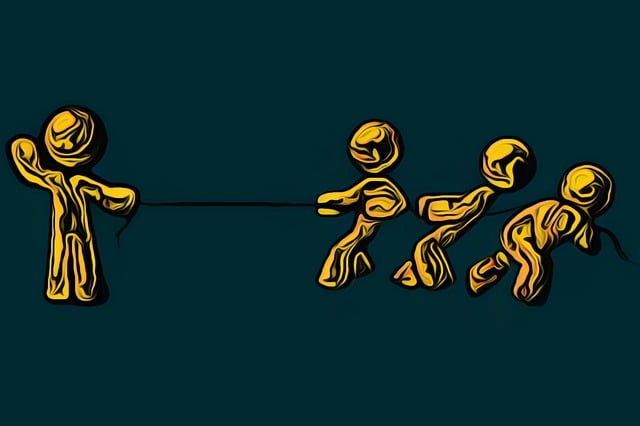
Father Rohr’s observation is reflected in what appears to be a tug-of-war in the Bible.
On the one hand, there is the emphasis upon right belief/right practice. People get revelation from God, then create a set of beliefs based on their understanding of it, and ultimately form a religion headed by people whose job it is to interpret and enforce those beliefs. The intent behind the Book of Leviticus, that contains a lot of these rules and practices, was noble: honor God. The reality, though, is that it legitimized an institution that could be sidetracked by the ego of religious professionals.
That’s because when religion is reduced to right belief/right practice, human ego/vanity has a field day. There’s something addictive about setting yourself up as God’s right hand person. Pride and self-righteousness parade behind the facade of piety.
The other party in this biblical tug-of-war is the emphasis upon right living in light of God’s heart for the hurting. In the Old Testament there is the constant push to care for the “widow, orphan, and immigrant.” The prophets constantly preached this, as Isaiah did in the verse above. And, of course, Jesus in the New Testament brought this front and center. He blasted the Pharisees (Matthew 23), then praised those who didn’t know theology too well but lived like they knew what God really wanted (Matthew 25:31-46).
There shouldn’t be such a biblical battle, of course. Right belief should lead to right living, in the way Jesus envisioned. Ego, though, gets in the way.
This is why we find the tug-of-war in the Bible, because it seems ingrained in our existence. Every sphere of humanity–religious, societal, political–reflects it. One path leads to building walls and separating. The other, to tearing down those walls and uniting.
It makes sense to join the side where Jesus is tugging on the rope. He’s the one who will make the difference, of course.